January 23, 2026
Joint Open Letter
By Yazda and the Free Yezidi Foundation to the Iraqi Government, the United States, European Countries and the United Nations
On the Risks to Accountability, Security, and Justice Arising from the Transfer of ISIL Detainees from Syria to Iraq
We, the undersigned organizations, write to express our deep concern regarding the transfer of ISIL detainees from northeastern Syria to Iraq at a time of heightened regional instability. According to publicly available information, 150 ISIL detainees have already been transferred, and plans are reportedly underway that could involve the transfer of up to 7,000 ISIL prisoners, including Foreign Terrorist Fighters (FTFs). Although we recognize the complex security challenges faced by Iraq and its partners, large-scale transfers carried out without an internationally supported accountability framework risk undermining justice efforts, regional and global security, social cohesion, and long-term stability.
These transfers are taking place amid ongoing attacks by Syrian Government forces and affiliated armed groups against the Syrian Democratic Forces (SDF) that had been holding ISIL detainees for several years. The attacks are affecting detention facilities and displacement camps. This includes Al-Hol camp, which continues to host tens of thousands of individuals with alleged ISIL links and has long been recognized as a highly fragile environment with significant protection and radicalization risks.
The deteriorating security environment in northeastern Syria heightens the risk of ISIL and extremist resurgence, posing a direct threat to civilians, including ethnic and religious minorities, such as Yazidis, in both Syria and Iraq.
In this context, the movement of large numbers of ISIL detainees raises legitimate concerns about safety, oversight, and Iraq’s capacity to manage, without sustained international support, a significantly increased number of ISIL prisoners while ensuring meaningful accountability. We therefore underscore the urgent need for full transparency, coordination, and international engagement throughout the process, including sustained support for the SDF, who for more than a decade have played a critical role in protecting civilians, securing detention facilities, and preventing ISIL resurgence on behalf of the international community.
Our organizations were established in direct response to ISIL’s genocide against the Yazidi community and its systematic targeting of all those who opposed or did not conform to its extremist ideology. For more than a decade, together with survivors from Yazidi, Christian, Shia Turkmen, Shabak, and other affected communities, we have consistently called for accountability that reflects the full scope and gravity of ISIL crimes.
To date, accountability efforts have remained limited. In Iraq, ISIL members have largely been prosecuted under terrorism-related charges, leaving core crimes, such as genocide, crimes against humanity war crimes, sexual violence, killings, torture, enslavement, forced indoctrination and militarization, and forced displacement, unaddressed in judicial proceedings. This approach has prevented the establishment of an authoritative judicial record of ISIL crimes committed against all affected communities and has excluded survivors from meaningful participation in justice processes.
Accountability for ISIL crimes is not only a legal obligation but a necessary foundation for reconciliation, sustainable peace and global security. Prosecuting ISIL members for genocide, crimes against humanity, and war crimes is essential to reveal the systematic and multi-community nature of ISIL violence, counter denial and historical distortion, and ensure that responsibility is attributed to individual perpetrators rather than entire communities. Credible justice processes can therefore reduce grievances, prevent collective blame, strengthen trust in state institutions, and contribute to long-term stability and non-recurrence.
While we are deeply concerned by current developments, particularly the rise of extremist behaviour and targeted attacks against ethnic and religious minorities, we also recognize that this presents an important moment for Iraq to combat impunity. Iraq has taken meaningful steps toward recognition and accountability for ISIL crimes, including the adoption of a groundbreaking reparations framework, the Yazidi Survivors Law,
and ongoing efforts to exhume mass graves of ISIL victims across the country. These exhumations are uncovering critical evidence of atrocities committed against multiple communities and underscore the urgent need for prosecutions that reflect the full extent of these crimes. Without corresponding judicial processes that hold perpetrators individually responsible, these efforts risk remaining incomplete and falling short of survivors’ expectations for justice and truth.
Iraq’s recent election to the United Nations Human Rights Council for the 2026-2028 term and its National Action Plan on Human Rights further provide a framework for strengthened international cooperation on accountability. With coordinated international support, Iraq can transform these efforts into a comprehensive justice process that establishes the truth about ISIL crimes against all affected communities, strengthens social cohesion, and contributes to durable peace and non-recurrence.
Despite the passing of time, survivors continue to express a clear and consistent demand for justice. In a recent survey
conducted by Yazda with 601 survivors, more than 98% emphasized the importance of prosecuting ISIL members for genocide and crimes against humanity, and 95% rejected any form of amnesty. These views reflect not only a desire for accountability, but for truth, recognition, and a future free from recurrence.
In light of the above, we respectfully call for the following actions:
To the Iraqi Government
- Ensure full transparency and oversight regarding any transfer of ISIL detainees from Syria to Iraq, including public clarification of the number and nationality of detainees, and applicable legal safeguards, in coordination with relevant international partners and institutions.
- Establish and apply rigorous vetting, screening, and classification procedures for all transferred detainees, with international technical support as needed, to assess individual criminal responsibility, distinguish between levels of involvement, identify suspects responsible for core international crimes, and ensure that those most responsible are prioritized for prosecution.
- Guarantee that no form of amnesty, pardon, or early release is granted to individuals responsible for genocide, crimes against humanity, and war crimes, and publicly reaffirm Iraq’s commitment to accountability in line with international law and survivor expectations.
- Adopt comprehensive legislation incorporating genocide, crimes against humanity, and war crimes into national law, ensuring that ISIL crimes are prosecuted in their full scope and that judicial proceedings contribute to truth-telling, reconciliation, and social cohesion. In this regard, the existing draft law prepared by the Committee on International Humanitarian Law linked to the Prime Minister’s Office should be formally transmitted to Parliament for discussion and adoption as a matter of priority.
- In parallel with domestic efforts, explore complementary international accountability pathways, including cooperation with the International Criminal Court (ICC). This could include lodging a declaration under Article 12(3) of the Rome Statute to accept the Court’s jurisdiction, and referring at least one high-level ISIL member for prosecution, thereby providing an international judicial platform that would draw global attention to ISIL crimes, reinforce the rule of law, and contribute to countering radicalization by publicly exposing and condemning the group’s atrocities.
To States
- Provide sustained support to the SDF and relevant civilian authorities responsible for securing ISIL detention facilities and displacement camps in northeastern Syria, while prioritizing the protection of civilians and preventing actions that risk destabilizing these facilities, enabling escapes, or contributing to renewed ISIL and extremist activity.
- Provide sustained, predictable, and coordinated legal, technical, financial, and political support to Iraq, including support for judicial reform, specialized war crimes units, forensic and investigative capacity, detention management, and witness and survivor protection, to ensure fair trials that meet international standards.
- Support transparency and accountability mechanisms related to detainee transfers, including monitoring arrangements and information-sharing frameworks, and continue to support partners responsible for securing detention facilities and protecting civilians from ISIL and extremist threats.
- Repatriate their nationals detained in Syria or Iraq without delay and investigate and prosecute them for genocide, crimes against humanity, war crimes, and related offenses, or actively pursue cases under universal jurisdiction, thereby sharing responsibility for accountability and reducing pressure on Iraq’s detention and judicial systems.
To the United Nations
- Support transparent, coordinated, and rights-respecting transfer processes, including by facilitating information-sharing, technical assistance, and international oversight where appropriate, to ensure that transfers contribute to accountability rather than impunity.
- Ensure timely, transparent, and survivor-centered access to evidence collected by the UN Investigative Team to Promote Accountability for Crimes Committed by Daesh/ISIL (UNITAD), so that national and international courts can effectively pursue accountability and establish a comprehensive historical record of ISIL crimes.
- Enhance coordination among relevant UN entities to support Iraq in managing the legal, security, and human rights implications of detainee transfers, with a focus on non-recurrence, social cohesion, and the protection of affected communities.
We remain committed to constructive engagement with all stakeholders. Without coordinated, transparent, and survivor-centered action, the transfer of ISIL detainees risks repeating past failures and undermining prospects for justice, reconciliation, and peace. We therefore urge all concerned actors to act collectively and decisively to ensure that accountability for ISIL crimes against all affected communities is finally realized.
Yazda
Free Yezidi Foundation
Download this joint letter in English here.
Download this Joint Letter in Arabic here.
###
For media inquiries, please contact:
info@yazda.org
About Yazda:
Yazda is a non-governmental, non-profit organization that was established in 2014 in response to the genocide committed by the self-declared Islamic State (ISIS) against the Yazidis and other minorities in Iraq. Yazda manages a portfolio of humanitarian, justice, advocacy, and development-related projects, all of which are community and survivor-centered in terms of design and implementation. Since its inception, Yazda has been working with local and international partners to provide humanitarian, accountability, and advocacy services to vulnerable minority groups in Iraq in their post-genocide recovery. The organization has been operating in Iraq since October 2014 and has main offices in Duhok in the Kurdistan Region of Iraq and a branch office in Sinjar in Nineveh Province. Yazda is registered as a non-profit organization in the United States, the United Kingdom, Iraq, Kurdistan Region of Iraq. Over the past 8 years, Yazda has grown to employ around 80 staff on average, received support from numerous donors, both institutional and individual, and has reached tens of thousands of direct and indirect beneficiaries through its programs and initiatives.
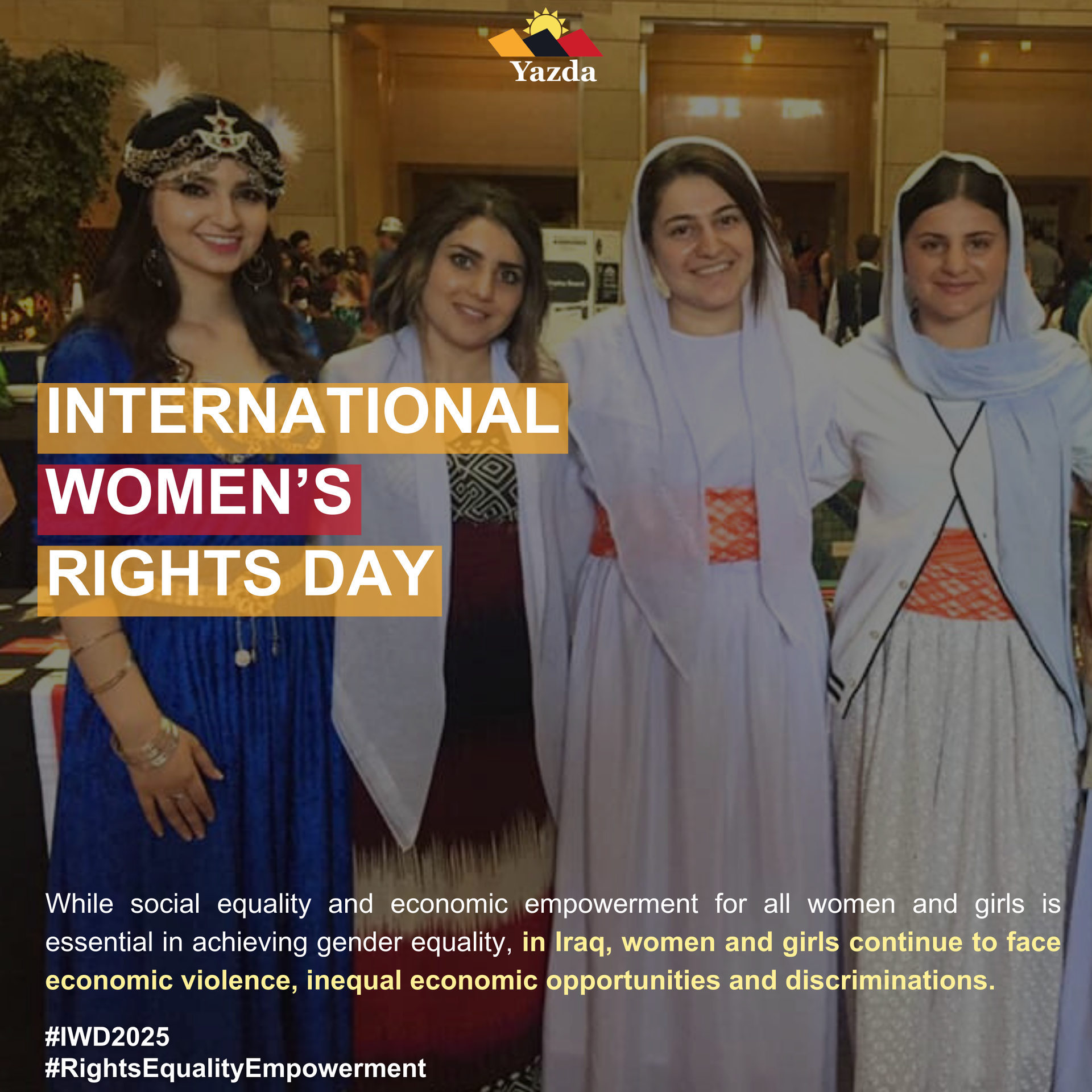
Yazda’s Statement on International Women’s Rights Day: Advancing Economic Justice for Women and Girls in Iraq
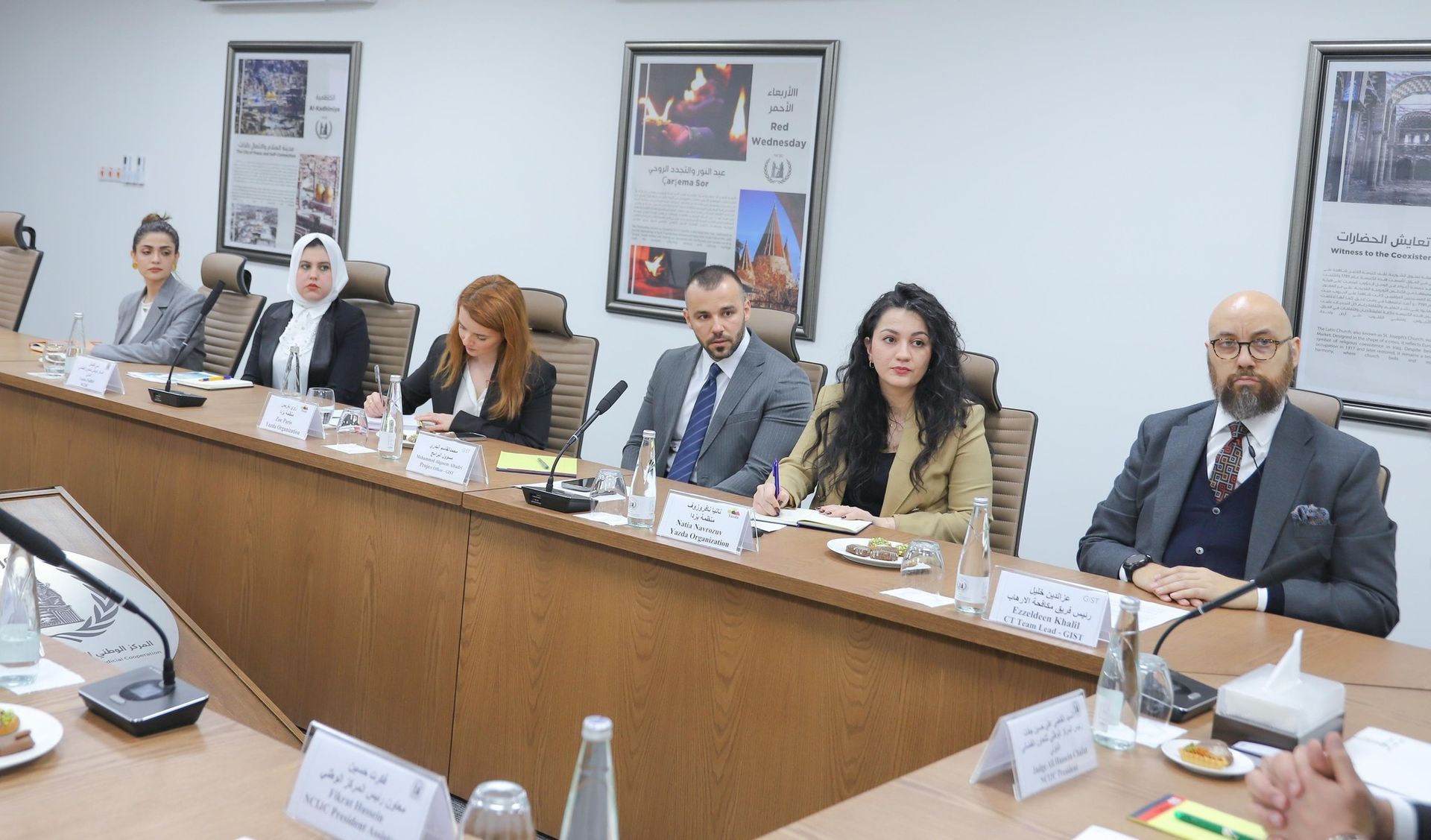
Baghdad, 12 February 2025 Yazda's Executive Director, Natia Navrouzov, met with Judge Ali Hussein Jafat, President of the National Center for International Judicial Cooperation (NCIJC), and his team to discuss pathways toward justice and accountability for ISIL crimes in Iraq. Hasan Jamil Khalid from the Coalition for Just Reparations (C4JR), the meeting’s organizer, was present as well as William Warda from Hammurabi Human Rights Organization and Yazda's Head of Programs, Zoe Paris. The NCIJC was established under the Iraqi High Judiciary following the closure of the United Nations Investigative Team to Promote Accountability for Crimes Committed by Da’esh/ISIL (UNITAD) in September 2024. The center’s mandate is to continue UNITAD’s work, focusing on delivering justice and accountability for crimes perpetrated by ISIL. This meeting marked the NCIJC’s inaugural engagement with civil society organizations (CSOs) in Iraq. All participants underscored the importance of building robust partnerships between the center and CSOs to ensure the justice process in Iraq remains survivor-centered and transparent. During the discussions, Yazda’s Executive Director raised several critical points: ● Pursuit of Justice Post-UNITAD Closure: Despite UNITAD’s departure, affected communities maintain hope for justice regarding international crimes committed in Iraq. Natia Navrouzov emphasized that Iraq must take the first step by passing legislation to criminalize core international crimes (war crimes, genocide and crimes against humanity). In response, Judge Ali Hussein Jafat noted that until such a law is adopted, prosecutions for international crimes will proceed using Anti-Terrorism Law No. 13 of 2005 alongside provision 7 of the Yazidi Survivors Law. ● Ensuring Survivor Safety and Informed Consent: The center must guarantee the safe participation of survivors in judicial processes, including the full implementation of witness protection measures. Survivor testimonies must be handled with the utmost care and confidentiality, shared only with their informed consent. ● Concerns Over the General Amnesty Law: The Yazidi community expressed significant concern about the potential implications of the general amnesty law, fearing it could lead to the release of ISIL members currently imprisoned in Iraq. The Supreme Judicial Council has the next day issued a statement addressing these concerns and providing clarification on scope of the amnesty law which can be accessed here: Supreme Judicial Court Statement . Yazda remains committed to continued engagement with the NCIJC to ensure that avenues for prosecuting international crimes and securing justice for ISIL survivors are firmly established and upheld in Iraq. -END- Read this Press Release in Arabic here . For media inquiries, please contact: info@yazda.org About Yazda: Yazda is a non-governmental, non-profit organization that was established in 2014 in response to the genocide committed by the self-declared Islamic State (ISIS) against the Yazidis and other minorities in Iraq. Yazda manages a portfolio of humanitarian, justice, advocacy, and development-related projects, all of which are community and survivor-centered in terms of design and implementation. Since its inception, Yazda has been working with local and international partners to provide humanitarian, accountability, and advocacy services to vulnerable minority groups in Iraq in their post-genocide recovery. The organization has been operating in Iraq since October 2014 and has main offices in Duhok in the Kurdistan Region of Iraq and a branch office in Sinjar in Nineveh Province. Yazda is registered as a non-profit organization in the United States, the United Kingdom, Iraq, Kurdistan Region of Iraq. Over the past 8 years, Yazda has grown to employ around 80 staff on average, received support from numerous donors, both institutional and individual, and has reached tens of thousands of direct and indirect beneficiaries through its programs and initiatives.
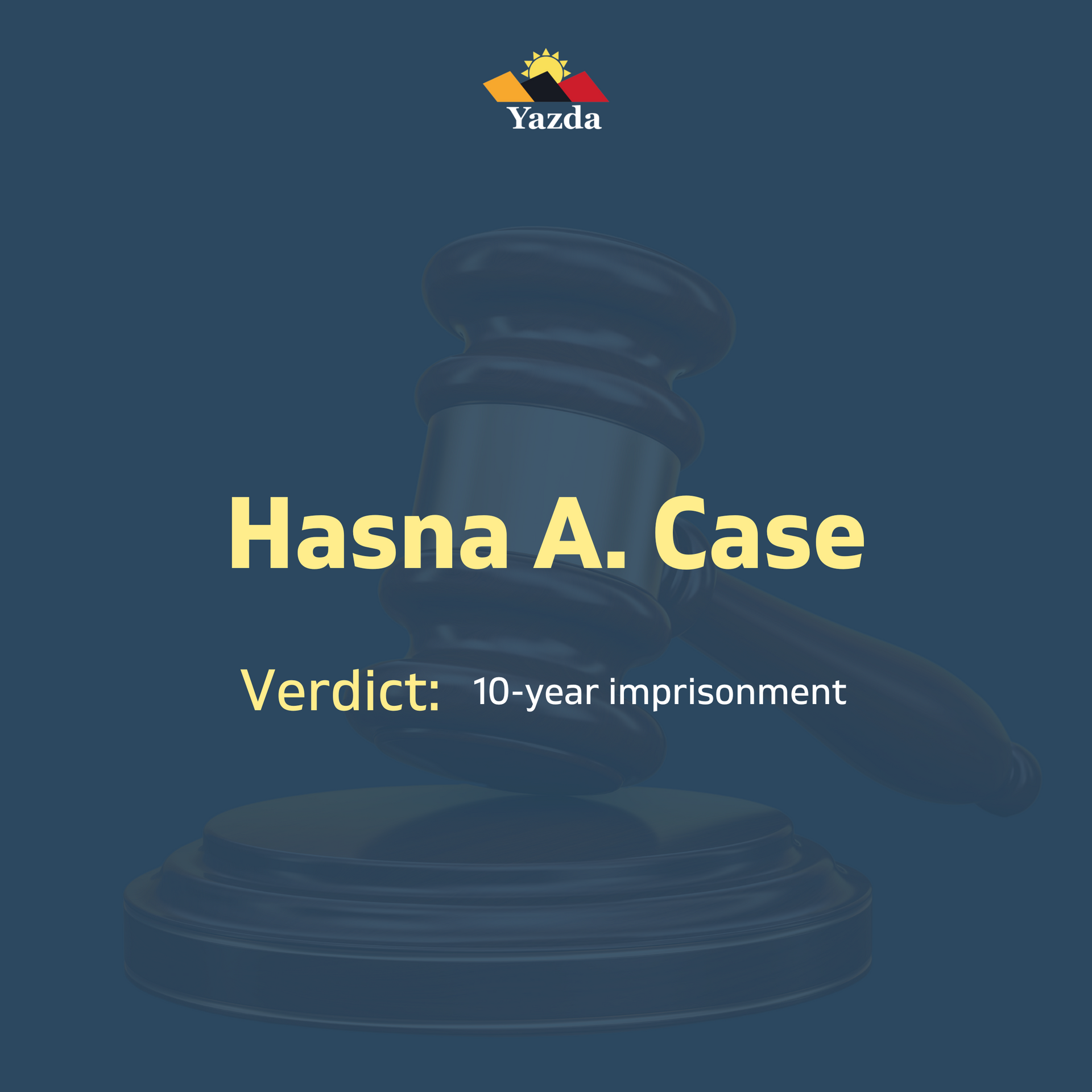
11 December 2024 Today, the international crimes division of the District Court of The Hague handed down the verdict in the Hasna A. case . It is the first trial in the Netherlands in which a member of the so-called Islamic State in Syria and the Levant (ISIL, also referred to as ISIS, IS, or by its Arabic acronym Daesh) has been convicted for crime committed against Yazidis. Hasna A., a Dutch national, travelled to Syria in 2015 with her four-year-old son, married an ISIL-member and lived in the ISIL-controlled city of Raqqa. She was tried for charges related to membership of ISIL, a terrorist group, as well as for endangering her son by bringing him with her to Syria and keeping him there. Importantly, Hasna A. also stood trial for the use of two Yazidi women as domestic slaves. The Yazidi women –referred to throughout the criminal proceedings only as ‘Z.’ and ‘S.’— had been enslaved by ISIL in August 2014. They were enslaved and kept in several houses where Hasna A. stayed whilst living in Raqqa in 2015 (Z.) and 2016 (S.), and Hasna A. forced them to perform domestic chores. Hasna A. also forced Z. to look after her four-year-old son. The slavery charges were brought against Hasna A. as crimes against humanity. Hasna A. is one of twelve Dutch women who had been repatriated from detention camps in Northern Syria at the end of 2022. She was arrested upon arrival in the Netherlands and taken into pretrial detention, appearing before the Trial Panel every three months. The Trial Panel had referred the case to the investigating judge and further investigation took place into the charges, which included hearing both Yazidi women as witnesses in 2024. The substantive hearings in the criminal proceedings against Hasna A. took place before the Trial Panel on 14, 16 and 17 October 2024. In today’s verdict, the court sentenced Hasna A. to a 10-year prison sentence for four offences: enslaving Z. in Syria in 2015, membership to the terrorist organization ISIL, promoting terrorist crimes and endangering her minor son. The court held that the enslavement of Z. amounted to a crime against humanity. The sentence is higher than the demand of the public prosecutor, who had demanded a prison sentence of eight years. The slavery charges against S. were not proven and Hasna A. was acquitted in relation to this offence. The verdict is available in Dutch and an English translation will be available soon. The two Yazidi survivors Z. and S. who participated in the trial as victims (survivors), injured parties and witnesses to the facts were accompanied by Yazda and supported throughout the process with translation, mental health and awareness support. The arrest, prosecution and trial of Hasna A. sends a clear message that, like other countries applying similar universal jurisdiction principles, the Netherlands will not be a safe haven for ISIL perpetrators. With today’s conviction, the Netherlands becomes the second country in the world to convict an ISIL-member for international crimes committed against Yazidis, looking beyond terrorism. Z. commented : "Our dream has finally come true, and we’ve achieved the result we longed for. This woman, Hasna A., caused us immense harm, and now it’s time for justice to prevail. Holding individuals accountable for their actions is a vital part of the justice process." S. added: "Honestly, I’m truly relieved to see justice finally served. However, a 10-year prison sentence feels insufficient and will never fully compensate for the suffering we have endured.” The outcome of this trial would have also not been possible without their legal representatives, Brechtje Vossenberg and Barbara van Straaten from law firm Prakken d’Oliveira Human Rights Lawyers in Amsterdam (the Netherlands). Brechtje Vossenberg commented: “It is thanks to the bravery and resilience of women like Z. and S. that the court was able to hand this verdict down and convict Hasna A. for the international crime of slavery committed against Z. Despite the disappointment that the charges relating to S. were unfortunately not proven, the verdict still marks another milestone in the long road to justice for the Yazidi community. It is the first of its kind here in the Netherlands and an important signal that the international crimes committed against Yazidis will be prosecuted here whenever possible. My clients’ participation in this trial was crucial to the establishment of the truth and the measure of justice that was obtained here today. I take my hat off to them both.” The Dutch court took a groundbreaking approach by providing online access to the substantive hearing sessions in both Dutch and Kurdish Kurmanji. This allowed survivors abroad and those who were unable to attend the hearings in person, to follow remotely both the substantive hearings in October and the pronouncement of the judgement today. Yazda facilitated screenings of the trial in Duhok (Kurdistan Region of Iraq) and Sinjar (Federal Iraq) where most of the global Yazidi community members currently reside. Around 40 members of the Yazidi community, including family members of one of the witnesses in the case attended the events and were, for the first time in a decade, able to witness justice in action. Following the verdict, one participant commented: “We want ISIL criminals to face fair sentencing, and we hope other countries will follow the Netherlands’ example in prosecuting these criminals.” Another added: “Other trials should be accessible online, and survivors in those countries should be invited to attend.” This trial is another milestone in the quest for justice by ISIL survivors. It is also only the 10th conviction worldwide of an ISIL member for crimes against Yazidis, a decade since the start of the genocide. Indeed, 9 convictions were handed down in Germany so far, including three for genocide. Recently, Sweden and France have initiated legal proceedings against alleged ISIL members for their involvement in crimes against Yazidis, signaling an important step in holding perpetrators accountable in a broader international context. However, the recent and abrupt closure of UNITAD on 17 September 2024 might jeopardize ongoing investigations and trials in third countries as the question of the accessibility of the evidence has still not been resolved. Natia Navrouzov, Executive Director at Yazda commented: "We commend the Dutch authorities and everyone who supported this case. Witnessing survivors follow the livestream of the verdict today from our offices in Duhok and Sinjar was a powerful reminder of the purpose behind our work, as it is ultimately for them. We are deeply proud of Z. and S., whose courage in coming forward made this case possible. While we are immensely relieved that Hasna A. has been convicted for her crimes, we had hoped the slavery charges concerning S. would also be fully acknowledged." ### Read the Arabic press release here. Download this English press release here. For media inquiries, please contact: Tonny Omondi Media and Communications Coordinator e: tonny.omondi@yazda.org About Yazda: Yazda is a non-governmental, non-profit organization that was established in 2014 in response to the genocide committed by the self-declared Islamic State (ISIS) against the Yazidis and other minorities in Iraq. Yazda manages a portfolio of humanitarian, justice, advocacy, and development-related projects, all of which are community and survivor-centered in terms of design and implementation. Since its inception, Yazda has been working with local and international partners to provide humanitarian, accountability, and advocacy services to vulnerable minority groups in Iraq in their post-genocide recovery. The organization has been operating in Iraq since October 2014 and has main offices in Duhok in the Kurdistan Region of Iraq and a branch office in Sinjar in Nineveh Province. Yazda is registered as a non-profit organization in the United States, the United Kingdom, Iraq, Kurdistan Region of Iraq. Over the past 8 years, Yazda has grown to employ around 80 staff on average, received support from numerous donors, both institutional and individual, and has reached tens of thousands of direct and indirect beneficiaries through its programs and initiatives.
The release of this crucial report follows the UN Security Council (UNSC) resolution to extend the mandate of the Investigative Team to Promote Accountability for Crimes Committed by Da’esh/ISIL ( UNITAD ) only until September 2024 ( UNSC resolution 2697/2023 ). The report reflects the concerns and recommendations of Iraqi NGOs and survivors' networks. Yazda, a member of the Coalition for Just Reparations ( C4JR ), joined an alliance of Iraqi NGOs in calling for comprehensive reparations for survivors of atrocity crimes perpetrated during the ISIL conflict in Iraq. In September 2023, prior to the passing of resolution 2697 by the UNSC, Yazda led the publication of a statement endorsed by 50 organizations expressing concerns about the imminent closure of UNITAD. Subsequently, within C4JR, Yazda facilitated consultations with NGOs online and in person, ensuring that their feedback was communicated to the UN, particularly in preparation for the UN Secretary-General's report released in January 2024 on Iraq’s request to receive UNITAD’s evidence. In parallel, Yazda consulted survivors’ networks, including Hope Givers, Survivors Voice Network (SVN), Speicher-1700 NGO, and the Yazidi Survivors Networks (YSN), incorporating their perspectives into the report. Natia Navrouzov, Executive Director at Yazda and co-author of the report, comments: “The report, especially its concrete recommendations, is a testament to the deep knowledge of Iraqi civil society on issues of justice and the lack thereof in Iraq. Iraqi organizations are the experts and should not be ignored. We advocated for the creation of UNITAD but were not involved in its termination. To this day, we have not been presented with a clear strategy from Iraq and the international community regarding the fate and more importantly, the use, of the evidence collected by UNITAD and what comes next. While UNITAD’s completion roadmap, due on 15 March 2024, may provide some answers, we were not meaningfully consulted on it either. Moving forward, we want to be part of the conversation and of the solution.” For the Arabic version of the Press Release, click here . For any inquiries, please contact info@yazda.org ### 300 North 27th Street, Suite C. - Lincoln, Nebraska 68503, USA info@yazda.org - www.yazda.org
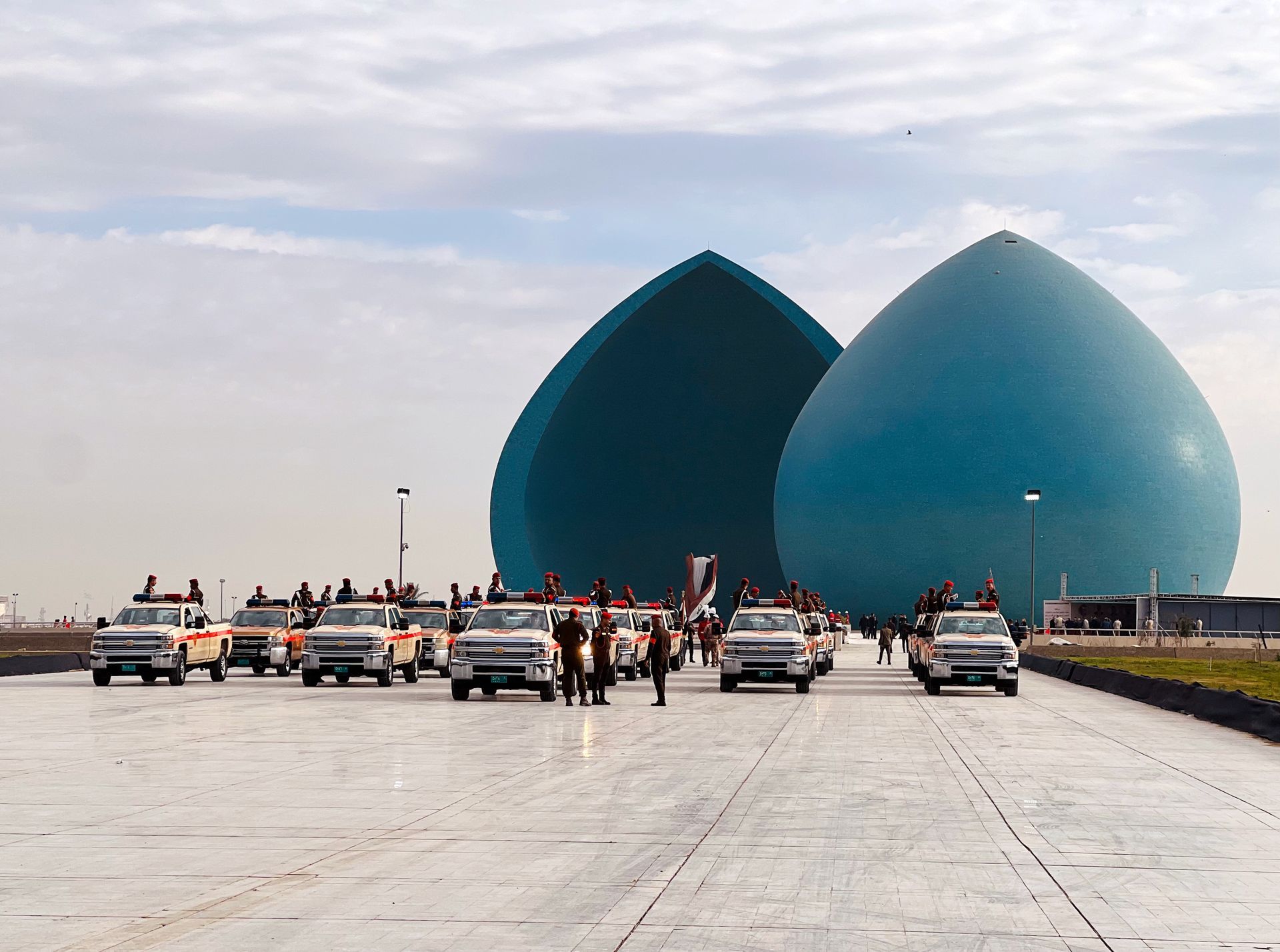
22 January 2024 Ceremonies in Baghdad, Solagh and the three villages (Hardan, Kocho and Qney) On 22 January 2024, under the auspice of the Office of the Prime Minister and in the presence of Iraqi and international officials and Yazidi community members, a funeral will be held in Baghdad following the identification of 41 Yazidi victims from Hardan, Kocho and Qney. Following this national-wide ceremony, the remains of the victims will be taken to Sinjar where a local-led ceremony will be organized on 24 January 2024, at the recently inaugurated Yazidi Genocide Memorial in Solagh. During this ceremony, Yazidi religious rituals will be performed. The remains of the victims will be then handed over to their families to allow them to bury them in their respective villages of Hardan, Kocho and Qney. From 24 to 26 January 2024, mourning days will be observed in these three villages and members of the community will be able to visit and pay their respects. The return of the sixth batch of remains and ongoing exhumations The identification of the remains was carried out by the Iraqi Medico-Legal Department (MLD) of Iraqi Ministry of Health, with the assistance of the UN Investigative Team for Accountability of Da’esh/ISIL (UNITAD) and the International Commission on Missing Persons (ICMP). The UN-supported exhumation process in Sinjar started in March 2019 and is ongoing. So far, around 60 mass graves have been exhumed and around 20 still need to be opened. The mass graves in Kocho and Solagh were the first ones to be exhumed from March 2019, followed by Hardan in February 2022 and Qney in June 2022 . This is believed to be the sixth batch of remains of Yazidi victims to be returned to Sinjar and a total of 41 victims were identified. Previously, remains have been returned mainly to Kocho and Solagh and the identification process is still ongoing. Support provided by Yazda and partners As for previous ceremonies, Yazda and other organizations will accompany Yazidi community members during this extremely sensitive time. Yazda has been coordinating the process over the past months with the national authorities and members of the community as well as partners from the International Organization for Migration (IOM), UNITAD and Nadia’s Initiative which will be present to provide support during the ceremonies. From its side, Yazda will deploy different teams to the burial sites. Yazda’s Case Managers will be present to provide psychological support and Yazda’s Mobile Medical Unit will provide medical assistance to the community where needed. Yazda’s Documentation Team will film the official speeches, report on the ceremonies and interview the authorities and partners, including members of the MLD and representatives of UNITAD and ICMP. The community will be invited to provide feedback on the process and report any concerns. Yazda’s Investigation Coordinator and focal point for the event, Ismail Qasim comments: “We have been supporting the process of exhumations over the past 5 years at least and it is far from being done. The crime scenes left by ISIL are countless and necessite joint efforts from all stakeholders involved, including internationals. Therefore, it is crucial that Iraq continues its collaboration with entities such as UNITAD to support the affected communities to recover the remains and bury them in a dignified way." Yazda presents its condolences to all the affected families as well as the wider Yazidi community and reiterates its commitment to work tirelessly in the pursuit of justice and the truth. For the Arabic version of the Press Release, click here .
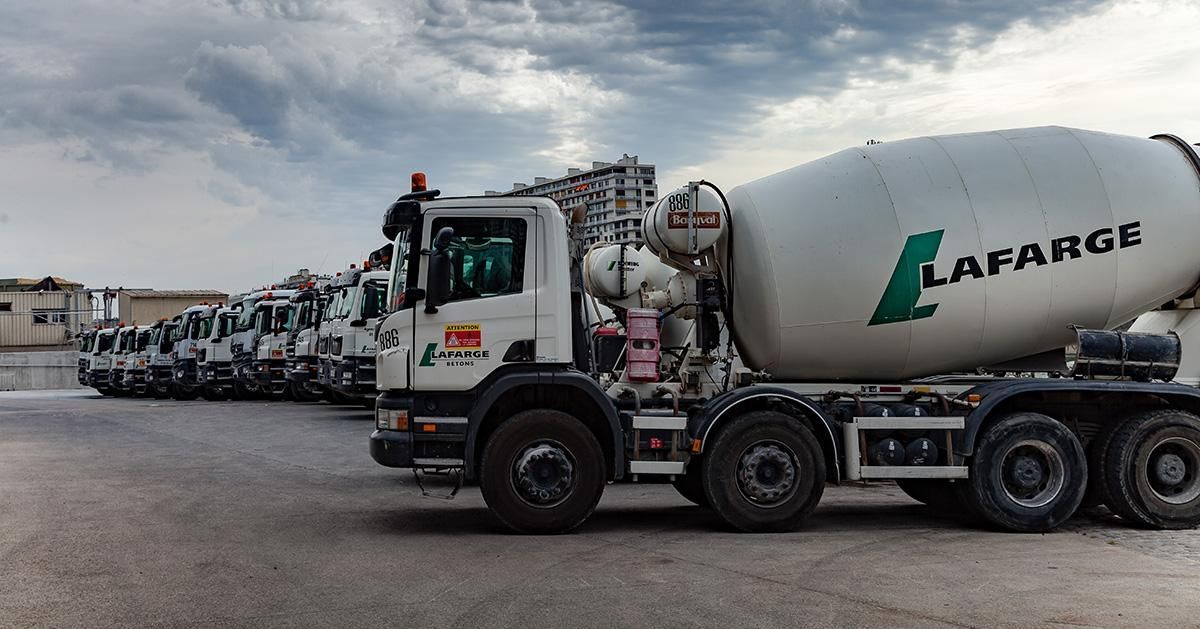
Yazda welcomes the decision rendered on the 16 th January, 2024, by the Cour de Cassation, the French Supreme Court, confirming the indictment of Lafarge, now Holcim, for complicity in crimes against humanity. This decision echoes the landmark ruling in this case rendered in September 2021 , which held that any person can be indicted as an accomplice to crimes against humanity, if it knowingly provided support to the perpetrator of such crimes, even in the absence of intent to associate oneself with the commission of their crimes or to adhere to their criminal projects. With this new decision by the Cour de Cassation, the victims of the Syrian and Iraqi conflict are a step closer to justice for the horrors inflicted upon them by ISIS and other terror groups. This decision validates the gravity of the allegations against Lafarge and sends a strong signal that corporations must be held accountable for their actions, especially when they may contribute to crimes against humanity. “Yazda reiterates its commitment to seeking justice for the Yazidi community and other victims of ISIS. As a civil party in the Lafarge case, Yazda will continue to actively participate in the legal proceedings, in the pursuit of truth and accountability,” commented Natia Navrouzov, Legal Advocacy Director at Yazda. “This decision constitutes a significant milestone in these critically important proceedings, which will serve as a landmark for corporate accountability for international crimes. Despite numerous attempts by the defendants to obtain the dismissal of the charges of complicity of crimes against humanity on technicalities, we are now one step closer to having this case heard by a trial court and decided on its merits”, commented Luke Vidal, counsel for Yazda. For the Arabic version of the Press Release, click here . ### 300 North 27th Street, Suite C. - Lincoln, Nebraska 68503, USA info@yazda.org - www.yazda.org