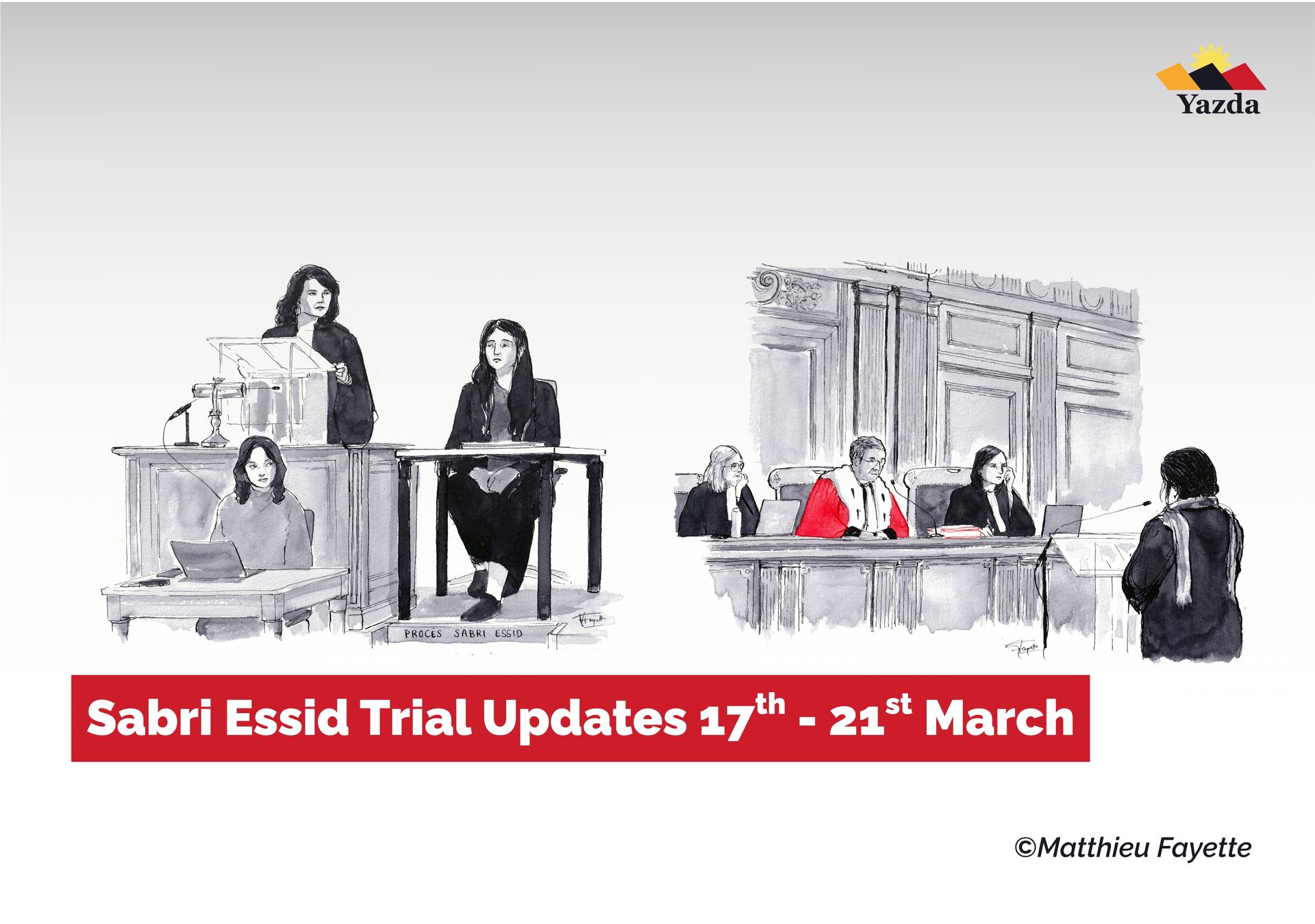
From March 17 to March 21, 2026, the Paris Criminal Court heard five days of proceedings in the case against Sabri Essid, a French ISIL member charged with genocide and crimes against humanity against Yazidi women and children.
The following provides a day-by-day updates of the key testimonies, evidence, and legal developments presented during the trial.
Sabri Essid Trial Update – Day 1
17th March 2026
Trial opens against Sabri Essid, French ISIL member charged with genocide and crimes against humanity against Yazidi women and children.
The presiding judge opened with a detailed contextual report on the Yazidi religion, retraced the 2014 ISIL attack on Sinjar and the unfolding genocide, as well as its physical, psychological, social, and economic consequences on the community to this day.
He detailed the systematic kidnapping and separation of women and girls who were distributed and sold among ISIL members and subjected to domestic and sexual slavery. Men were forced to choose between conversion or being killed.
“Convert or die.”
“I’m still alive, but I’m dead inside.” An investigator from the French Central Office for the Prevention of Violence Against Persons relayed the testimony of two witnesses and their children about the horrors they endured during their captivity, held by Sabri Essid and several other ISIL members.
Their extraordinary courage to testify during the investigation eventually led to the identification of Sabri Essid, and made this trial possible. A map produced by Yazda was projected to show the locations of mass graves in Sinjar, and several Yazda reports have been filed in the case. The investigative judges also relied on reports from NGOs and international organizations including UN entities such as UNITAD and IIIM.
A witness from French domestic security services detailed Sabri Essid’s radicalization and departure to Syria. He first went to Syria in 2006 and made several trips back and forth over the years. His network included several known Salafists and radical Islamists in France, among them Mohamed Merah, who carried out the 2012 Toulouse attacks, and the two Clain brothers, one of whom is known as
“the voice of ISIL”.
“Sabri Essid was no ordinary figure.” Witness of the French domestic security services on Sabri Essid’s role in ISIL’s security apparatus, also called Amni. Sabri Essid has been identified as particularly violent towards his captives, who reported daily rapes, corporal punishment for non-obedience, and deprivation of food and water.
According to the French domestic security services, there exists no certainty about either the date or the circumstances of his death. Multiple contradictory versions of Sabri Essid’s presumed death circulated within ISIL, some saying he was killed in conflict, others relating he stepped on a landmine. The Prosecutor, for her part, pointed out that, as a matter of fact, Sabri Essid’s death is far from certain.
Sabri Essid Trial Update – Day 2
18th March 2026
During the second day of the trial, Natia Navrouzov, Executive Director of Yazda, testified at the Court, highlighting:
“The genocide has deeply fractured the Yazidi community: families have been shattered and dispersed across the globe, and our religion, culture, and language are under threat. Achieving justice including by safeguarding Yazidi cultural and religious identity is a moral imperative. If we fail, the Yazidi identity could disappear within a few generations, and ISIL will have achieved its goal.”
The day started with the testimony of Bazhad Farhan on behalf of the association Kinyat, which contributed to the documentation of ISIL crimes since the beginning of the genocide. With maps, he explained how ISIL’s attack unfolded from Tal Afar to Sinjar. He also focused on the key role occupied by social media in the sale and resale of Yazidi slaves, and how prices were higher for little girls. He also noted that, according to victims’ testimonies, foreign fighters were often the most violent.
The court then heard from three experts who have documented the systematic nature of ISIL crimes, with a focus on the highly organized system of slave trade, which was at the core of ISIL’s apparatus.
“I have never met Yazidis who had been captured, who had not been subjected to violence” – Sareta Ashraph, Barrister specialized in international criminal law.
“The purpose of the propaganda materials used was to justify the reduction of the Yazidis to slavery” – Rosalind Sipos, lawyer at the International, Impartial and Independent Mechanism (IIIM).
“Documentary evidence clearly shows that Daesh’s policy aimed to destroy the Yazidi population in whole or in part” – Stephanie Barbour, investigator at the Commission for International Justice and Accountability (CIJA)
Sabri Essid Trial Update – Day 3
19th March 2026
Trial against Sabri Essid, French ISIL member, charged with genocide and crimes against humanity against Yazidi women and children continues with the testimonies of additional parties.
The hearings started with the testimonies of two former female ISIL members. The first one was heard behind closed doors without the public. The second person heard was Leila Ouadi, Sabri Essid’s former wife. She was questioned about Essid’s activities within ISIL. She recounted his violent behavior and how he forced her son to execute an Israeli hostage for a propaganda video. She acknowledged having been aware of the genocide committed against the Yazidi people as well as the attacks on Sinjar, the massacre of the men, and the capture and enslavement of the women and children. She explained that within ISIL, the Yazidis were referred to as
“devil worshippers.”
In the afternoon, Pari Ibrahim, Executive Director of the Free Yazidi Foundation (FYF), testified about the physical and psychological harm that Yazidi women and children have endured, and some continue to endure. Harm that, for many, will last a lifetime. Ibrahim also highlighted the suffering of Yazidi children, whose unique trauma is often overlooked and compounded by the loss of years of education and the opportunity to develop their identities.
“Behind each number, there is a name, a face, an identity, a story.” – Pari Ibrahim, Free Yazidi Foundation. The day concluded with the reading of statements from one of the survivors who participated in the investigation but has withdrawn from the proceedings. Together with another survivor, she was kept by Essid in an ISIL detention center in Mayadeen in particularly harrowing living conditions and a total lack of medical care when it was needed. He raped both several times and forced them to take the contraceptive pill.
“My body is a wreck, but thankfully I have my children” – a Yazidi survivor
Sabri Essid Trial Update – Day 4
20th March 2026
The hearing started with one survivor bravely taking the stand to tell her story. She described her capture by ISIL, and how she was then sold to eight members. She recounted having been raped, including by Sabri Essid, sometimes in front of her daughter. She explained that her life is destroyed, but that she is holding on for her daughter’s sake.
“As the President of this court, I have been confronted to testimonies of the most horrific crimes. But what you have told me today, I have never heard it before.” - President of the Court
Another survivor then courageously stood before the court to relate the horrors ISIL has inflicted on her and her children. She was transferred by Sabri Essid with her children from one of her captors to an ISIL woman, Lina Ishaq who enslaved them five months. The same survivor testified against Lina Ishaq in Sweden which led to her conviction for genocide and crimes humanity in 2025 for enslaving Yazidi women and children.
“I would have preferred to be killed rather than raped.” - She testified.
In the afternoon, the son of a survivor who contributed to the investigation came forward, and the President used his discretionary power to allow him to be heard. As one of the few survivors of the mass graves in Kocho, he gave a chilling account of ISIL’s attack on his village and the separation from his family. He also highlighted how he had to work for years to
“buy” back his mother and sister and free them from captivity. “Those who took part in this genocide are a great danger to humanity.” - He testified.
Finally, the lawyers of the civil parties made their final pleadings. They underlined ISIL’s intention to destroy the Yazidi community and demonstrated that the enslavement of Yazidi women and children by Sabri Essid was committed to attain this goal.
“This trial is an opportunity to go beyond the process itself and to make the pain of the Yazidi people known.” - Patrick Baudouin, lawyer of the FIDH and LDH
“In light of the magnitude of the crimes, this trial in France is imperfect and partial justice but it is the only available space for Yazidi survivors.” - Clémence Bectarte, lawyer of the Yazidi survivors in this case
Yazda’s lawyers underlined the widespread, and particularly systematic nature of the attack, demonstrating that it was premeditated and had been prepared for several months. Further, they explained that the genocide is still ongoing, and that survivors are left with a constant sense of insecurity and fear.
The fact that the enslavement and sexual enslavement of Yazidi women and girls, as well as the indoctrination of Yazidi boys, continue to this day demonstrates the difficulties involved in bringing the genocide to a definitive end and providing effective protection to the victims. - Justine Vinet, lawyer for Yazda
The Yazidi community stands out for its solidarity and resilience. Its members have spoken out, and continue to do so, despite their fear and the pain that resurfaces with every word. Not by choice but to carry the memory of those who can no longer do so. - Marie Lehmon, lawyer for Yazda
Sabri Essid Trial Update – Day 5
21st March 2026
Trial against Sabri Essid, French ISIL member, charged with genocide and crimes against humanity against Yazidi women and children concludes with the closing arguments of the Attorney General and the announcement of the verdict.
Attorney General Sophie Havard called for Sabri Essid’s conviction for genocide, complicity in genocide, crimes against humanity, and complicity in crimes against humanity, and requested a sentence of life imprisonment. She noted the singular nature of the genocide against the Yazidis and recalled that this court is the first French jurisdiction to rule on the crimes committed by ISIL against the Yazidis.
“The Yazidi women and children were property, of which Sabri Essid and the other members of ISIL disposed freely.” - Attorney General Sophie Havard
In the afternoon, the presiding Judge pronounced the verdict and found Sabri Essid guilty on all charges. A press release on the decision can be found on Yazda’s website.
“The decision of the Paris Criminal Court marks a crucial step in the fight against impunity for ISIL fighters, whose crimes should not only be prosecuted under terrorism charges but also as international crimes – including genocide – against civilians and ethnic and religious communities.” - Natia Navrouzov, Executive Director of Yazda
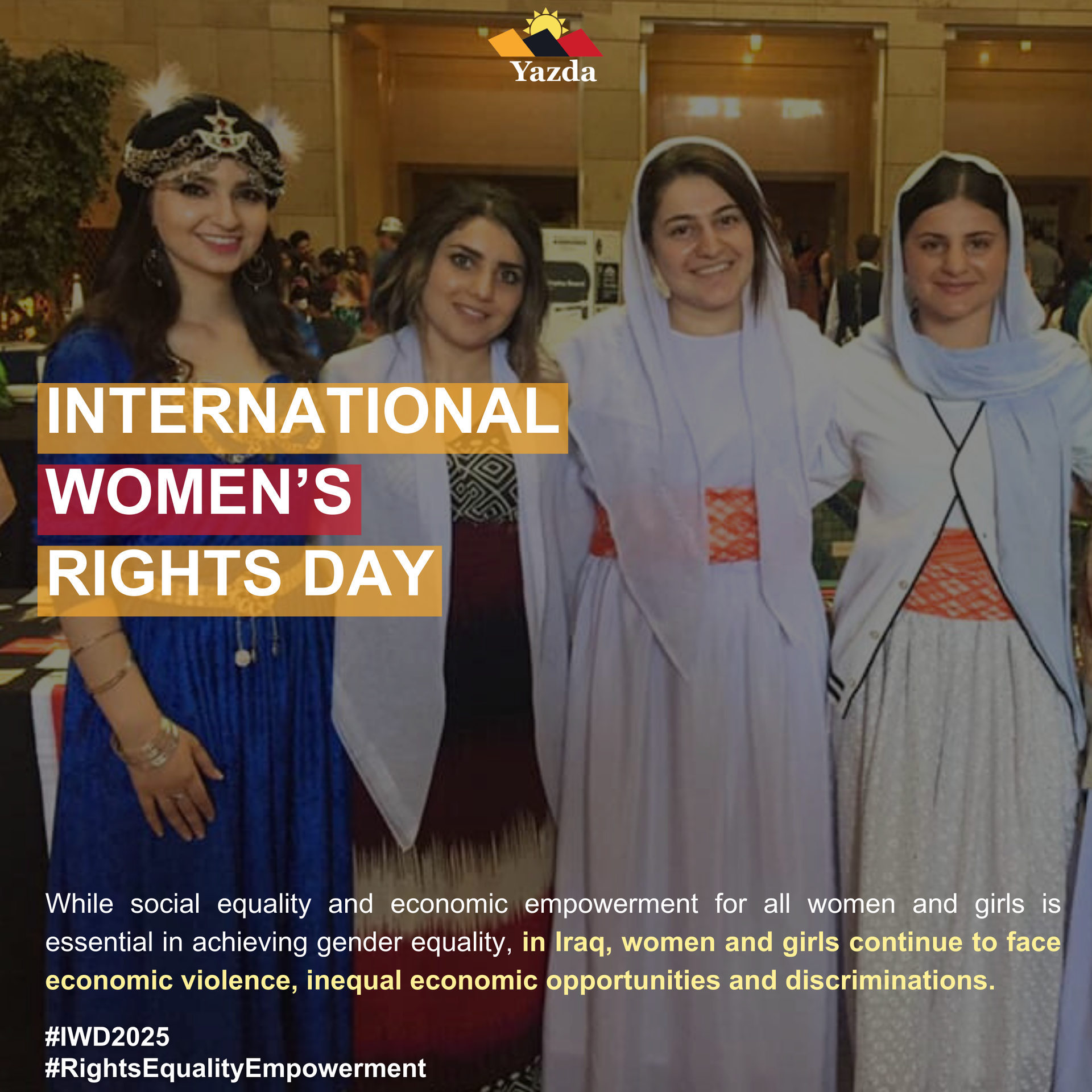
Yazda’s Statement on International Women’s Rights Day: Advancing Economic Justice for Women and Girls in Iraq
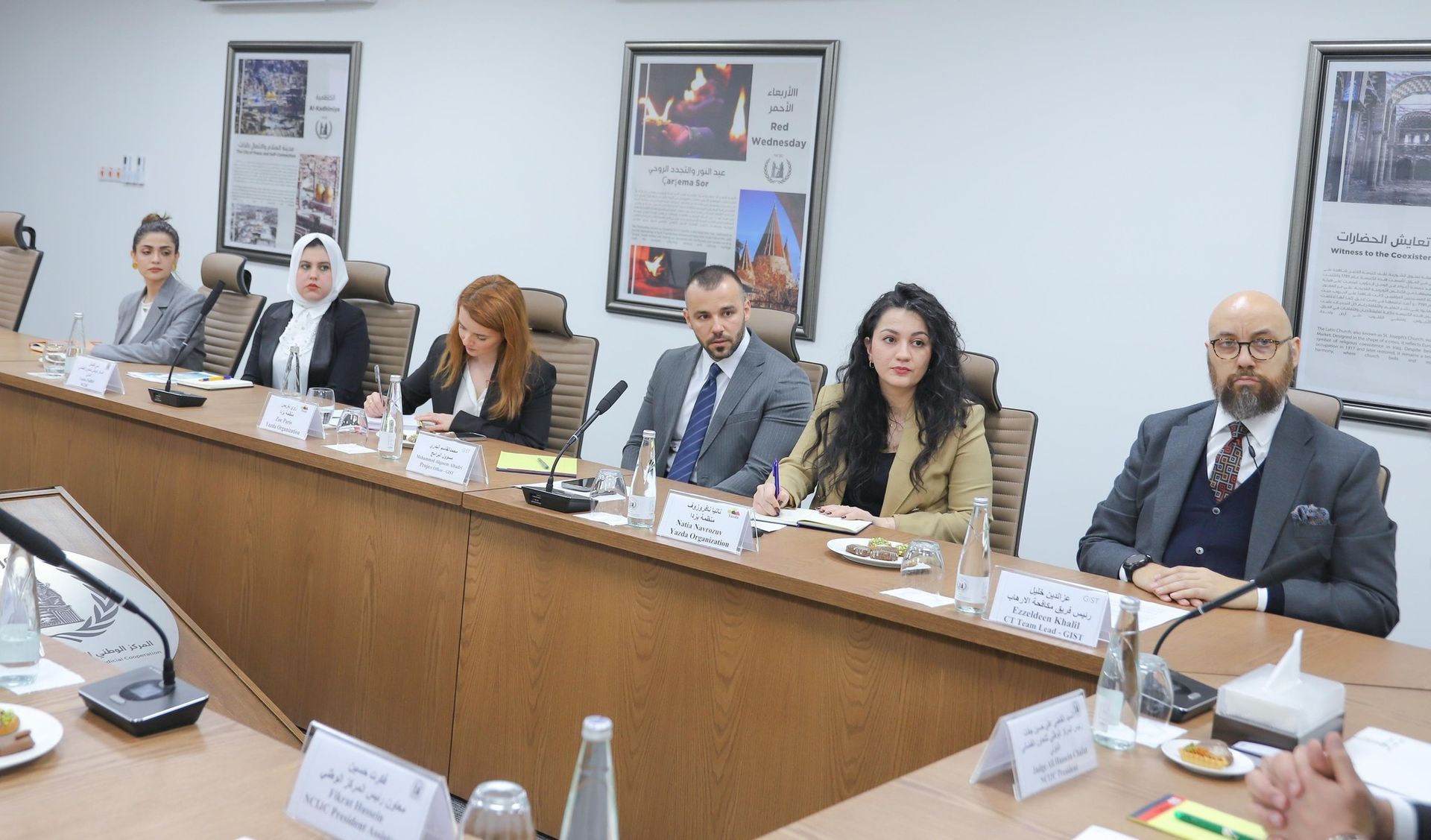
Baghdad, 12 February 2025 Yazda's Executive Director, Natia Navrouzov, met with Judge Ali Hussein Jafat, President of the National Center for International Judicial Cooperation (NCIJC), and his team to discuss pathways toward justice and accountability for ISIL crimes in Iraq. Hasan Jamil Khalid from the Coalition for Just Reparations (C4JR), the meeting’s organizer, was present as well as William Warda from Hammurabi Human Rights Organization and Yazda's Head of Programs, Zoe Paris. The NCIJC was established under the Iraqi High Judiciary following the closure of the United Nations Investigative Team to Promote Accountability for Crimes Committed by Da’esh/ISIL (UNITAD) in September 2024. The center’s mandate is to continue UNITAD’s work, focusing on delivering justice and accountability for crimes perpetrated by ISIL. This meeting marked the NCIJC’s inaugural engagement with civil society organizations (CSOs) in Iraq. All participants underscored the importance of building robust partnerships between the center and CSOs to ensure the justice process in Iraq remains survivor-centered and transparent. During the discussions, Yazda’s Executive Director raised several critical points: ● Pursuit of Justice Post-UNITAD Closure: Despite UNITAD’s departure, affected communities maintain hope for justice regarding international crimes committed in Iraq. Natia Navrouzov emphasized that Iraq must take the first step by passing legislation to criminalize core international crimes (war crimes, genocide and crimes against humanity). In response, Judge Ali Hussein Jafat noted that until such a law is adopted, prosecutions for international crimes will proceed using Anti-Terrorism Law No. 13 of 2005 alongside provision 7 of the Yazidi Survivors Law. ● Ensuring Survivor Safety and Informed Consent: The center must guarantee the safe participation of survivors in judicial processes, including the full implementation of witness protection measures. Survivor testimonies must be handled with the utmost care and confidentiality, shared only with their informed consent. ● Concerns Over the General Amnesty Law: The Yazidi community expressed significant concern about the potential implications of the general amnesty law, fearing it could lead to the release of ISIL members currently imprisoned in Iraq. The Supreme Judicial Council has the next day issued a statement addressing these concerns and providing clarification on scope of the amnesty law which can be accessed here: Supreme Judicial Court Statement . Yazda remains committed to continued engagement with the NCIJC to ensure that avenues for prosecuting international crimes and securing justice for ISIL survivors are firmly established and upheld in Iraq. -END- Read this Press Release in Arabic here . For media inquiries, please contact: info@yazda.org About Yazda: Yazda is a non-governmental, non-profit organization that was established in 2014 in response to the genocide committed by the self-declared Islamic State (ISIS) against the Yazidis and other minorities in Iraq. Yazda manages a portfolio of humanitarian, justice, advocacy, and development-related projects, all of which are community and survivor-centered in terms of design and implementation. Since its inception, Yazda has been working with local and international partners to provide humanitarian, accountability, and advocacy services to vulnerable minority groups in Iraq in their post-genocide recovery. The organization has been operating in Iraq since October 2014 and has main offices in Duhok in the Kurdistan Region of Iraq and a branch office in Sinjar in Nineveh Province. Yazda is registered as a non-profit organization in the United States, the United Kingdom, Iraq, Kurdistan Region of Iraq. Over the past 8 years, Yazda has grown to employ around 80 staff on average, received support from numerous donors, both institutional and individual, and has reached tens of thousands of direct and indirect beneficiaries through its programs and initiatives.
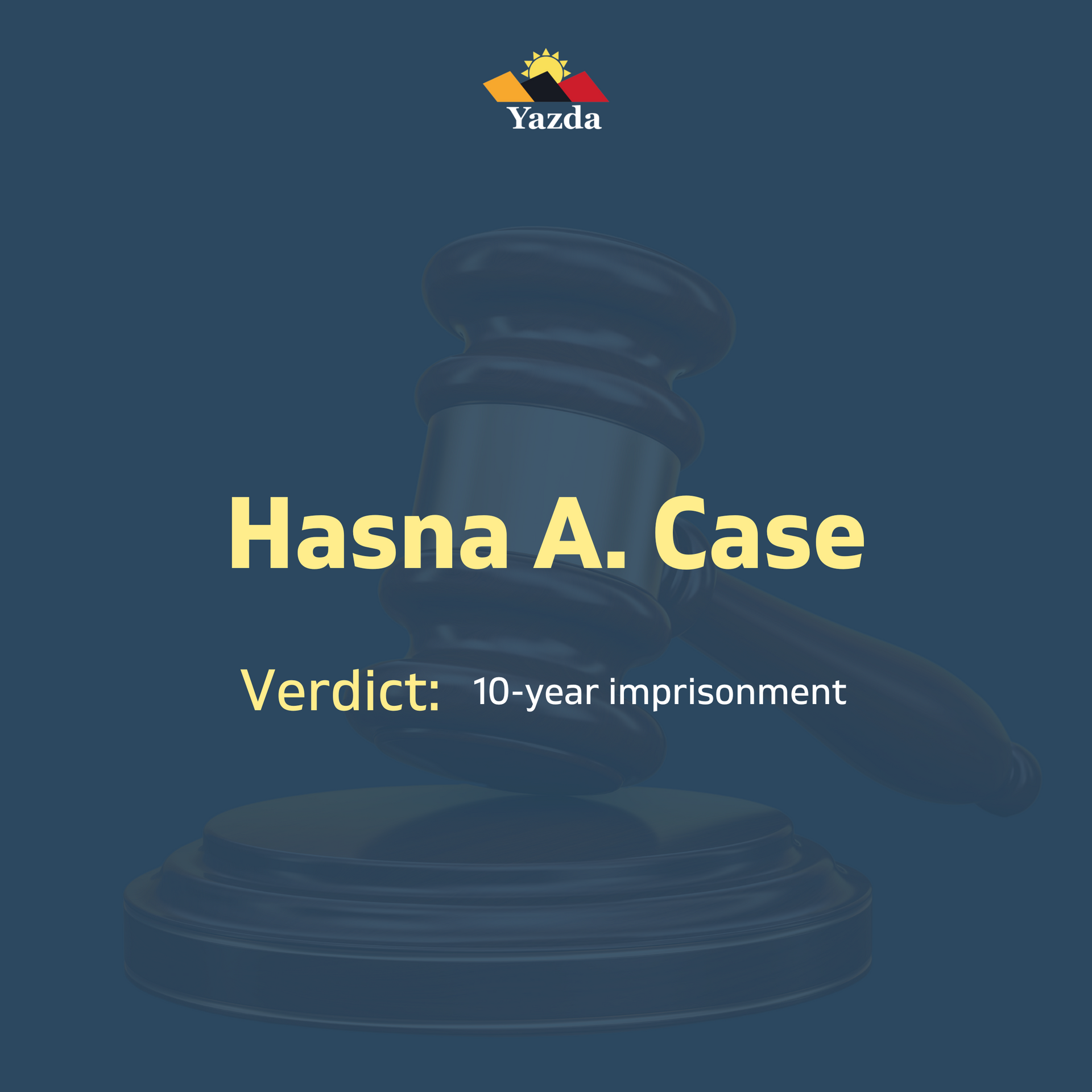
11 December 2024 Today, the international crimes division of the District Court of The Hague handed down the verdict in the Hasna A. case . It is the first trial in the Netherlands in which a member of the so-called Islamic State in Syria and the Levant (ISIL, also referred to as ISIS, IS, or by its Arabic acronym Daesh) has been convicted for crime committed against Yazidis. Hasna A., a Dutch national, travelled to Syria in 2015 with her four-year-old son, married an ISIL-member and lived in the ISIL-controlled city of Raqqa. She was tried for charges related to membership of ISIL, a terrorist group, as well as for endangering her son by bringing him with her to Syria and keeping him there. Importantly, Hasna A. also stood trial for the use of two Yazidi women as domestic slaves. The Yazidi women –referred to throughout the criminal proceedings only as ‘Z.’ and ‘S.’— had been enslaved by ISIL in August 2014. They were enslaved and kept in several houses where Hasna A. stayed whilst living in Raqqa in 2015 (Z.) and 2016 (S.), and Hasna A. forced them to perform domestic chores. Hasna A. also forced Z. to look after her four-year-old son. The slavery charges were brought against Hasna A. as crimes against humanity. Hasna A. is one of twelve Dutch women who had been repatriated from detention camps in Northern Syria at the end of 2022. She was arrested upon arrival in the Netherlands and taken into pretrial detention, appearing before the Trial Panel every three months. The Trial Panel had referred the case to the investigating judge and further investigation took place into the charges, which included hearing both Yazidi women as witnesses in 2024. The substantive hearings in the criminal proceedings against Hasna A. took place before the Trial Panel on 14, 16 and 17 October 2024. In today’s verdict, the court sentenced Hasna A. to a 10-year prison sentence for four offences: enslaving Z. in Syria in 2015, membership to the terrorist organization ISIL, promoting terrorist crimes and endangering her minor son. The court held that the enslavement of Z. amounted to a crime against humanity. The sentence is higher than the demand of the public prosecutor, who had demanded a prison sentence of eight years. The slavery charges against S. were not proven and Hasna A. was acquitted in relation to this offence. The verdict is available in Dutch and an English translation will be available soon. The two Yazidi survivors Z. and S. who participated in the trial as victims (survivors), injured parties and witnesses to the facts were accompanied by Yazda and supported throughout the process with translation, mental health and awareness support. The arrest, prosecution and trial of Hasna A. sends a clear message that, like other countries applying similar universal jurisdiction principles, the Netherlands will not be a safe haven for ISIL perpetrators. With today’s conviction, the Netherlands becomes the second country in the world to convict an ISIL-member for international crimes committed against Yazidis, looking beyond terrorism. Z. commented : "Our dream has finally come true, and we’ve achieved the result we longed for. This woman, Hasna A., caused us immense harm, and now it’s time for justice to prevail. Holding individuals accountable for their actions is a vital part of the justice process." S. added: "Honestly, I’m truly relieved to see justice finally served. However, a 10-year prison sentence feels insufficient and will never fully compensate for the suffering we have endured.” The outcome of this trial would have also not been possible without their legal representatives, Brechtje Vossenberg and Barbara van Straaten from law firm Prakken d’Oliveira Human Rights Lawyers in Amsterdam (the Netherlands). Brechtje Vossenberg commented: “It is thanks to the bravery and resilience of women like Z. and S. that the court was able to hand this verdict down and convict Hasna A. for the international crime of slavery committed against Z. Despite the disappointment that the charges relating to S. were unfortunately not proven, the verdict still marks another milestone in the long road to justice for the Yazidi community. It is the first of its kind here in the Netherlands and an important signal that the international crimes committed against Yazidis will be prosecuted here whenever possible. My clients’ participation in this trial was crucial to the establishment of the truth and the measure of justice that was obtained here today. I take my hat off to them both.” The Dutch court took a groundbreaking approach by providing online access to the substantive hearing sessions in both Dutch and Kurdish Kurmanji. This allowed survivors abroad and those who were unable to attend the hearings in person, to follow remotely both the substantive hearings in October and the pronouncement of the judgement today. Yazda facilitated screenings of the trial in Duhok (Kurdistan Region of Iraq) and Sinjar (Federal Iraq) where most of the global Yazidi community members currently reside. Around 40 members of the Yazidi community, including family members of one of the witnesses in the case attended the events and were, for the first time in a decade, able to witness justice in action. Following the verdict, one participant commented: “We want ISIL criminals to face fair sentencing, and we hope other countries will follow the Netherlands’ example in prosecuting these criminals.” Another added: “Other trials should be accessible online, and survivors in those countries should be invited to attend.” This trial is another milestone in the quest for justice by ISIL survivors. It is also only the 10th conviction worldwide of an ISIL member for crimes against Yazidis, a decade since the start of the genocide. Indeed, 9 convictions were handed down in Germany so far, including three for genocide. Recently, Sweden and France have initiated legal proceedings against alleged ISIL members for their involvement in crimes against Yazidis, signaling an important step in holding perpetrators accountable in a broader international context. However, the recent and abrupt closure of UNITAD on 17 September 2024 might jeopardize ongoing investigations and trials in third countries as the question of the accessibility of the evidence has still not been resolved. Natia Navrouzov, Executive Director at Yazda commented: "We commend the Dutch authorities and everyone who supported this case. Witnessing survivors follow the livestream of the verdict today from our offices in Duhok and Sinjar was a powerful reminder of the purpose behind our work, as it is ultimately for them. We are deeply proud of Z. and S., whose courage in coming forward made this case possible. While we are immensely relieved that Hasna A. has been convicted for her crimes, we had hoped the slavery charges concerning S. would also be fully acknowledged." ### Read the Arabic press release here. Download this English press release here. For media inquiries, please contact: Tonny Omondi Media and Communications Coordinator e: tonny.omondi@yazda.org About Yazda: Yazda is a non-governmental, non-profit organization that was established in 2014 in response to the genocide committed by the self-declared Islamic State (ISIS) against the Yazidis and other minorities in Iraq. Yazda manages a portfolio of humanitarian, justice, advocacy, and development-related projects, all of which are community and survivor-centered in terms of design and implementation. Since its inception, Yazda has been working with local and international partners to provide humanitarian, accountability, and advocacy services to vulnerable minority groups in Iraq in their post-genocide recovery. The organization has been operating in Iraq since October 2014 and has main offices in Duhok in the Kurdistan Region of Iraq and a branch office in Sinjar in Nineveh Province. Yazda is registered as a non-profit organization in the United States, the United Kingdom, Iraq, Kurdistan Region of Iraq. Over the past 8 years, Yazda has grown to employ around 80 staff on average, received support from numerous donors, both institutional and individual, and has reached tens of thousands of direct and indirect beneficiaries through its programs and initiatives.
The release of this crucial report follows the UN Security Council (UNSC) resolution to extend the mandate of the Investigative Team to Promote Accountability for Crimes Committed by Da’esh/ISIL ( UNITAD ) only until September 2024 ( UNSC resolution 2697/2023 ). The report reflects the concerns and recommendations of Iraqi NGOs and survivors' networks. Yazda, a member of the Coalition for Just Reparations ( C4JR ), joined an alliance of Iraqi NGOs in calling for comprehensive reparations for survivors of atrocity crimes perpetrated during the ISIL conflict in Iraq. In September 2023, prior to the passing of resolution 2697 by the UNSC, Yazda led the publication of a statement endorsed by 50 organizations expressing concerns about the imminent closure of UNITAD. Subsequently, within C4JR, Yazda facilitated consultations with NGOs online and in person, ensuring that their feedback was communicated to the UN, particularly in preparation for the UN Secretary-General's report released in January 2024 on Iraq’s request to receive UNITAD’s evidence. In parallel, Yazda consulted survivors’ networks, including Hope Givers, Survivors Voice Network (SVN), Speicher-1700 NGO, and the Yazidi Survivors Networks (YSN), incorporating their perspectives into the report. Natia Navrouzov, Executive Director at Yazda and co-author of the report, comments: “The report, especially its concrete recommendations, is a testament to the deep knowledge of Iraqi civil society on issues of justice and the lack thereof in Iraq. Iraqi organizations are the experts and should not be ignored. We advocated for the creation of UNITAD but were not involved in its termination. To this day, we have not been presented with a clear strategy from Iraq and the international community regarding the fate and more importantly, the use, of the evidence collected by UNITAD and what comes next. While UNITAD’s completion roadmap, due on 15 March 2024, may provide some answers, we were not meaningfully consulted on it either. Moving forward, we want to be part of the conversation and of the solution.” For the Arabic version of the Press Release, click here . For any inquiries, please contact info@yazda.org ### 300 North 27th Street, Suite C. - Lincoln, Nebraska 68503, USA info@yazda.org - www.yazda.org
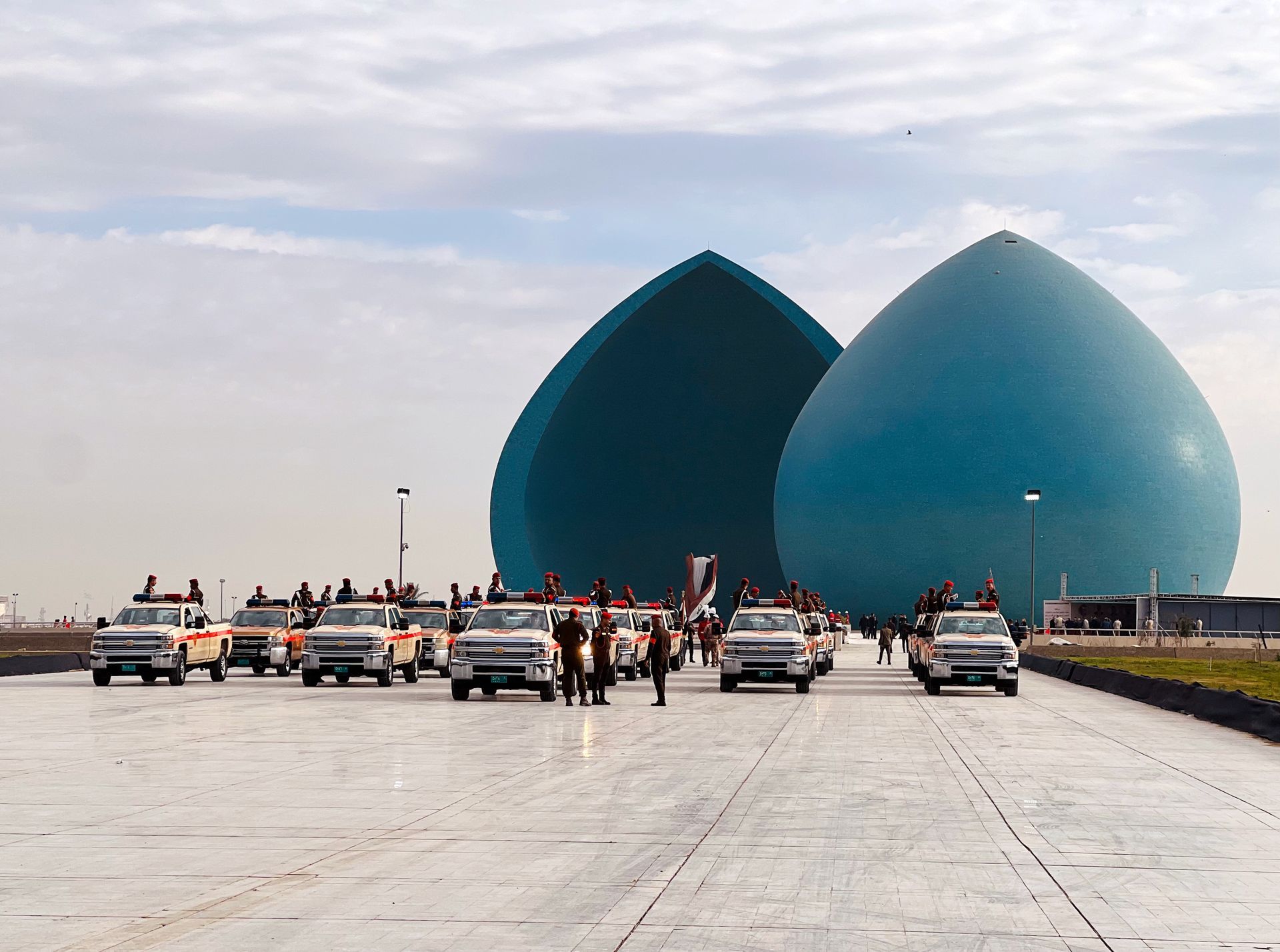
22 January 2024 Ceremonies in Baghdad, Solagh and the three villages (Hardan, Kocho and Qney) On 22 January 2024, under the auspice of the Office of the Prime Minister and in the presence of Iraqi and international officials and Yazidi community members, a funeral will be held in Baghdad following the identification of 41 Yazidi victims from Hardan, Kocho and Qney. Following this national-wide ceremony, the remains of the victims will be taken to Sinjar where a local-led ceremony will be organized on 24 January 2024, at the recently inaugurated Yazidi Genocide Memorial in Solagh. During this ceremony, Yazidi religious rituals will be performed. The remains of the victims will be then handed over to their families to allow them to bury them in their respective villages of Hardan, Kocho and Qney. From 24 to 26 January 2024, mourning days will be observed in these three villages and members of the community will be able to visit and pay their respects. The return of the sixth batch of remains and ongoing exhumations The identification of the remains was carried out by the Iraqi Medico-Legal Department (MLD) of Iraqi Ministry of Health, with the assistance of the UN Investigative Team for Accountability of Da’esh/ISIL (UNITAD) and the International Commission on Missing Persons (ICMP). The UN-supported exhumation process in Sinjar started in March 2019 and is ongoing. So far, around 60 mass graves have been exhumed and around 20 still need to be opened. The mass graves in Kocho and Solagh were the first ones to be exhumed from March 2019, followed by Hardan in February 2022 and Qney in June 2022 . This is believed to be the sixth batch of remains of Yazidi victims to be returned to Sinjar and a total of 41 victims were identified. Previously, remains have been returned mainly to Kocho and Solagh and the identification process is still ongoing. Support provided by Yazda and partners As for previous ceremonies, Yazda and other organizations will accompany Yazidi community members during this extremely sensitive time. Yazda has been coordinating the process over the past months with the national authorities and members of the community as well as partners from the International Organization for Migration (IOM), UNITAD and Nadia’s Initiative which will be present to provide support during the ceremonies. From its side, Yazda will deploy different teams to the burial sites. Yazda’s Case Managers will be present to provide psychological support and Yazda’s Mobile Medical Unit will provide medical assistance to the community where needed. Yazda’s Documentation Team will film the official speeches, report on the ceremonies and interview the authorities and partners, including members of the MLD and representatives of UNITAD and ICMP. The community will be invited to provide feedback on the process and report any concerns. Yazda’s Investigation Coordinator and focal point for the event, Ismail Qasim comments: “We have been supporting the process of exhumations over the past 5 years at least and it is far from being done. The crime scenes left by ISIL are countless and necessite joint efforts from all stakeholders involved, including internationals. Therefore, it is crucial that Iraq continues its collaboration with entities such as UNITAD to support the affected communities to recover the remains and bury them in a dignified way." Yazda presents its condolences to all the affected families as well as the wider Yazidi community and reiterates its commitment to work tirelessly in the pursuit of justice and the truth. For the Arabic version of the Press Release, click here .

Yazda welcomes the decision rendered on the 16 th January, 2024, by the Cour de Cassation, the French Supreme Court, confirming the indictment of Lafarge, now Holcim, for complicity in crimes against humanity. This decision echoes the landmark ruling in this case rendered in September 2021 , which held that any person can be indicted as an accomplice to crimes against humanity, if it knowingly provided support to the perpetrator of such crimes, even in the absence of intent to associate oneself with the commission of their crimes or to adhere to their criminal projects. With this new decision by the Cour de Cassation, the victims of the Syrian and Iraqi conflict are a step closer to justice for the horrors inflicted upon them by ISIS and other terror groups. This decision validates the gravity of the allegations against Lafarge and sends a strong signal that corporations must be held accountable for their actions, especially when they may contribute to crimes against humanity. “Yazda reiterates its commitment to seeking justice for the Yazidi community and other victims of ISIS. As a civil party in the Lafarge case, Yazda will continue to actively participate in the legal proceedings, in the pursuit of truth and accountability,” commented Natia Navrouzov, Legal Advocacy Director at Yazda. “This decision constitutes a significant milestone in these critically important proceedings, which will serve as a landmark for corporate accountability for international crimes. Despite numerous attempts by the defendants to obtain the dismissal of the charges of complicity of crimes against humanity on technicalities, we are now one step closer to having this case heard by a trial court and decided on its merits”, commented Luke Vidal, counsel for Yazda. For the Arabic version of the Press Release, click here . ### 300 North 27th Street, Suite C. - Lincoln, Nebraska 68503, USA info@yazda.org - www.yazda.org