Yazda Statement for the 12th Commemoration of the Kocho Village massacre in Sinjar
15 August 2026
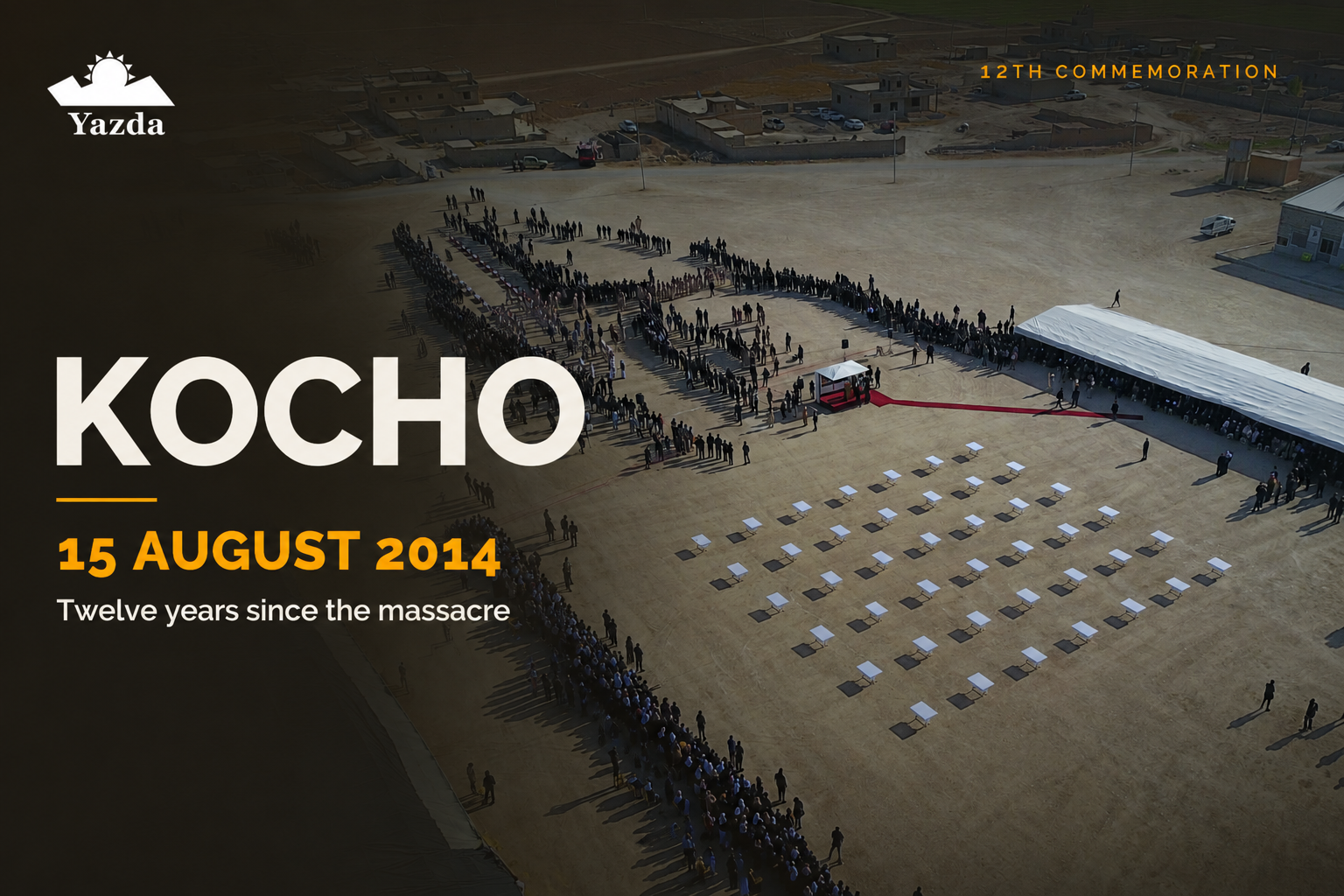
Today marks the 12th commemoration of the attacks on Kocho village in Sinjar. Kocho was once a vibrant community. It became a symbol of unimaginable suffering following the atrocities committed by ISIL from August 2014.
Following ISIL's attack on Sinjar, the group surrounded Kocho for twelve days, holding more than 1,700 people in the village between 3 and 15 August 2014. On 15 August, ISIL gathered the inhabitants in the village school and separated the men and older boys from the women and children. The men and boys were executed and buried in 17 mass graves across the village. Eighty-six women were separated out and massacred near Solagh. The remaining women and children were taken captive and subjected to torture, forced conversion, sexual violence, and enslavement.
The survivors of Kocho, both women and men, have shown remarkable courage in preserving the memory of their community and speaking publicly about the atrocities they endured. Through their testimonies and continued efforts to seek justice and accountability, they have helped bring the experiences of Kocho and the broader Yazidi genocide to national and international attention. Their voices have played an important role in ensuring that these crimes are documented, remembered, and recognized, and that the rights of victims and survivors, as well as the pursuit of justice, remain central to efforts to address the Yazidi genocide.
Kocho survivors and members of Survivors Rise Network shared what this day means to them.
Azhar Suhail, Kocho survivor, said: "On August 15, 2014, it was not only lives that were taken in Kocho, an entire childhood was stolen from its children, and I was one of the children. They took us captive, they took our women, and they left behind a bleeding village and a memory that refuses to die. Twelve years later, I am still here… to say: Kocho has not died, as long as there are survivors who remember and bear witness."
Thikran Mato, Kocho survivor and Yazda consultant, said: "Twelve years after the Kocho genocide, memory is no longer simply a way of recalling a painful past for me, it has become an act of bearing witness and an act of resistance. As a survivor of Kocho, I carry the responsibility of documenting what happened and preserving the voices of the victims. Memory does not simply preserve the past; it is the foundation for justice and for preventing genocide from happening again."
Widad Dawod, Kocho survivor, said: "We have been worn down by years of waiting for our kidnapped loved ones to return, or to recover their remains. How much longer? Is 12 years not enough? My question to every official is: When will I be able to bury my son's remains? I used to believe that with each passing year, the pain of separation and suffering would become easier to bear. But every year, the pain only grows. I no longer know what peace feels like. We will not forget."
Yazda's commitment goes beyond remembrance. We remain steadfast in our resolve to support the Yazidi community's ongoing efforts for justice, recovery, and rebuilding. We acknowledge the deep scars left by these atrocities and pledge to advocate tirelessly for the protection of human rights and to work toward preventing future genocides. In honoring Kocho, we also recognize the urgent need for continued solidarity and action to uncover the fate of missing persons, support their families, and bring justice to the victims and survivors of these atrocities.
###
Download this Press Release here.
Read this Press Release in Arabic here.
For media inquiries, please contact:
About Yazda:
Yazda is a non-governmental, non-profit organization that was established in 2014 in response to the genocide committed by the self-declared Islamic State (ISIS) against the Yazidis and other minorities in Iraq. Yazda manages a portfolio of humanitarian, justice, advocacy, and development-related projects, all of which are community and survivor-centered in terms of design and implementation. Since its inception, Yazda has been working with local and international partners to provide humanitarian, accountability, and advocacy services to vulnerable minority groups in Iraq in their post-genocide recovery. The organization has been operating in Iraq since October 2014 and has main offices in Duhok in the Kurdistan Region of Iraq and a branch office in Sinjar in Nineveh Province. Yazda is registered as a non-profit organization in the United States, the United Kingdom, Iraq, Kurdistan Region of Iraq. Over the past 8 years, Yazda has grown to employ around 80 staff on average, received support from numerous donors, both institutional and individual, and has reached tens of thousands of direct and indirect beneficiaries through its programs and initiatives.