Yazda Welcomes the Opening of the Mass Grave at Sharaf al-Din Shrine in Sinjar
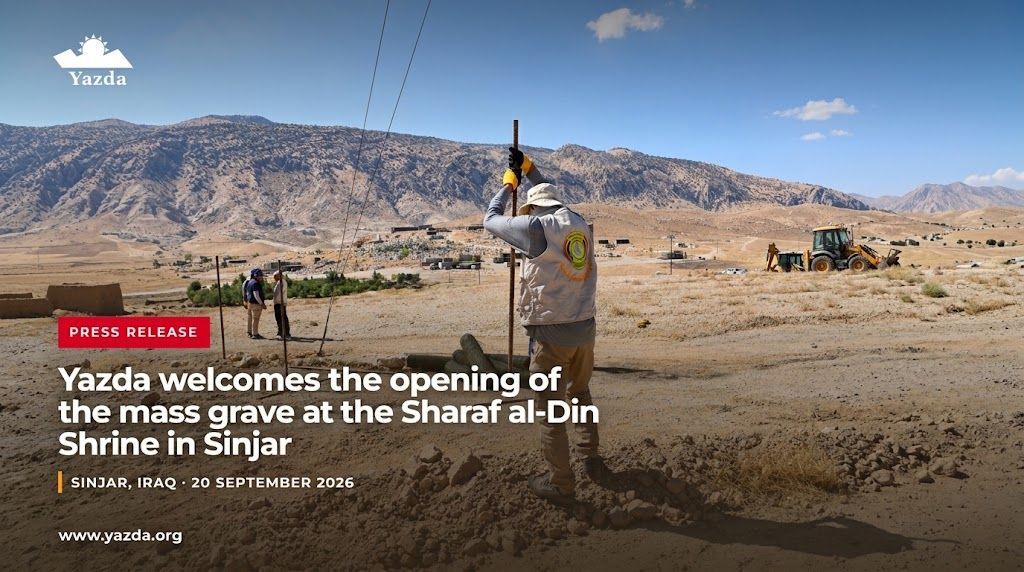
Sinjar, Iraq: On 20 September 2026, in the presence of the families of the victims, a ceremony marked the beginning of the process to open the mass grave at the Sharaf al-Din Shrine, in northern Sinjar. The site holds the remains of Yazidi victims of ISIL who were uncovered from mass graves in the villages of Khanasor and Bardiya.
The remains from those mass graves were first exhumed in 2015 by the authorities of the Kurdistan Region of Iraq (KRI) and reburied at the Sharaf al-Din Shrine in Sinjar on 13 August of that year, without DNA testing or formal identification.
Since then, families of the missing, supported by civil society organizations, have repeatedly called on both the Kurdistan Regional Government and the Iraqi Federal Government to coordinate their efforts and finalize the identification process, so that the remains can be returned to their families for a dignified burial.
A family member of one of the victims commented:
"We have waited more than ten years, not knowing if our loved ones were truly the ones buried in that grave. Ten years is too long to carry that kind of doubt. The disagreements between the authorities were never ours to carry, they were not our burden to bear. All we ever wanted was the truth, and the chance to bury our loved ones with dignity, under their own names.”
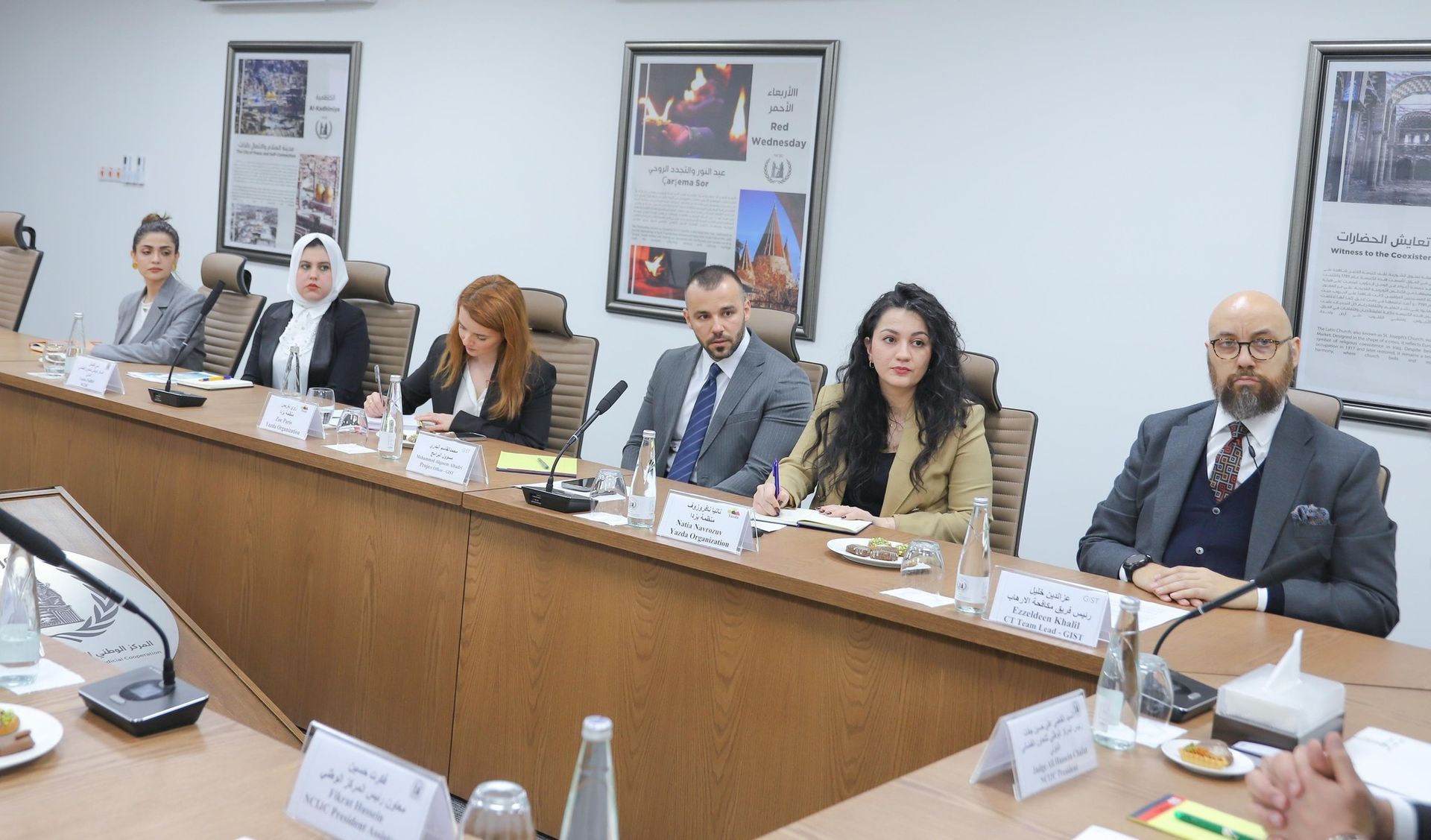
An agreement was finally reached following a key meeting held in Duhok in August, where Yazda joined Yazidi organizations, the International Commission on Missing Persons (ICMP), and Iraqi and Kurdistan Regional Government authorities to establish a joint mechanism for opening and exhuming this site. After years of advocacy by the families and civil society organizations, this agreement finally began to be implemented today, marking a long-awaited step toward the identification of the victims.
Ismael Qasim, Yazda's Investigations Coordinator, commented:
"Today, our team is present on the ground to document the exhumation, support the work of the institutions involved, and ensure that families remain informed and supported throughout every stage. We will continue to act as a bridge between the families, the relevant Iraqi and Kurdistan Regional Government authorities, and international organizations, facilitating coordination and providing the information needed to advance the identification process. Our commitment does not end with the exhumation. We will continue working alongside the families until their loved ones are identified and they can finally lay them to rest with dignity."
The exhumation and related technical procedures will continue until 6 October 2026, after which the remains will be transferred to forensic medicine laboratories in Baghdad for DNA analysis and identification.
Yazda presents its solidarity and condoleances to all the affected families and reiterates its commitment to the pursuit of truth and justice.
###
Download this Press Release here.
Read this Press Release in Arabic here.
For media inquiries, please contact:
info@yazda.org
About Yazda:
Yazda is a non-governmental, non-profit organization that was established in 2014 in response to the genocide committed by the self-declared Islamic State (ISIS) against the Yazidis and other minorities in Iraq. Yazda manages a portfolio of humanitarian, justice, advocacy, and development-related projects, all of which are community and survivor-centered in terms of design and implementation. Since its inception, Yazda has been working with local and international partners to provide humanitarian, accountability, and advocacy services to vulnerable minority groups in Iraq in their post-genocide recovery. The organization has been operating in Iraq since October 2014 and has main offices in Duhok in the Kurdistan Region of Iraq and a branch office in Sinjar in Nineveh Province. Yazda is registered as a non-profit organization in the United States, the United Kingdom, Iraq, Kurdistan Region of Iraq. Over the past 8 years, Yazda has grown to employ around 80 staff on average, received support from numerous donors, both institutional and individual, and has reached tens of thousands of direct and indirect beneficiaries through its programs and initiatives.